⭐ Color, Odor & Clarity Requirements in RBD Coconut Oil Quality Control
⭐ Color, Odor & Clarity Requirements in RBD Coconut Oil Quality Control
Learn the required color, odor, and clarity standards in RBD coconut oil and how manufacturers ensure consistent export quality for food, cosmetic, and industrial applications.
📌 Introduction
RBD Coconut Oil (Refined, Bleached, Deodorized Coconut Oil) is widely used in the food, cosmetics, personal care, and oleochemical industries. Because it undergoes a multi-step refining process, the final product must meet strict quality appearance standards—especially color, odor, and clarity.
These three factors determine the oil’s suitability for high-value applications and compliance with international specifications such as APCC, Codex, and buyer-specific QC protocols.
🎨 Color Requirements in RBD Coconut Oil
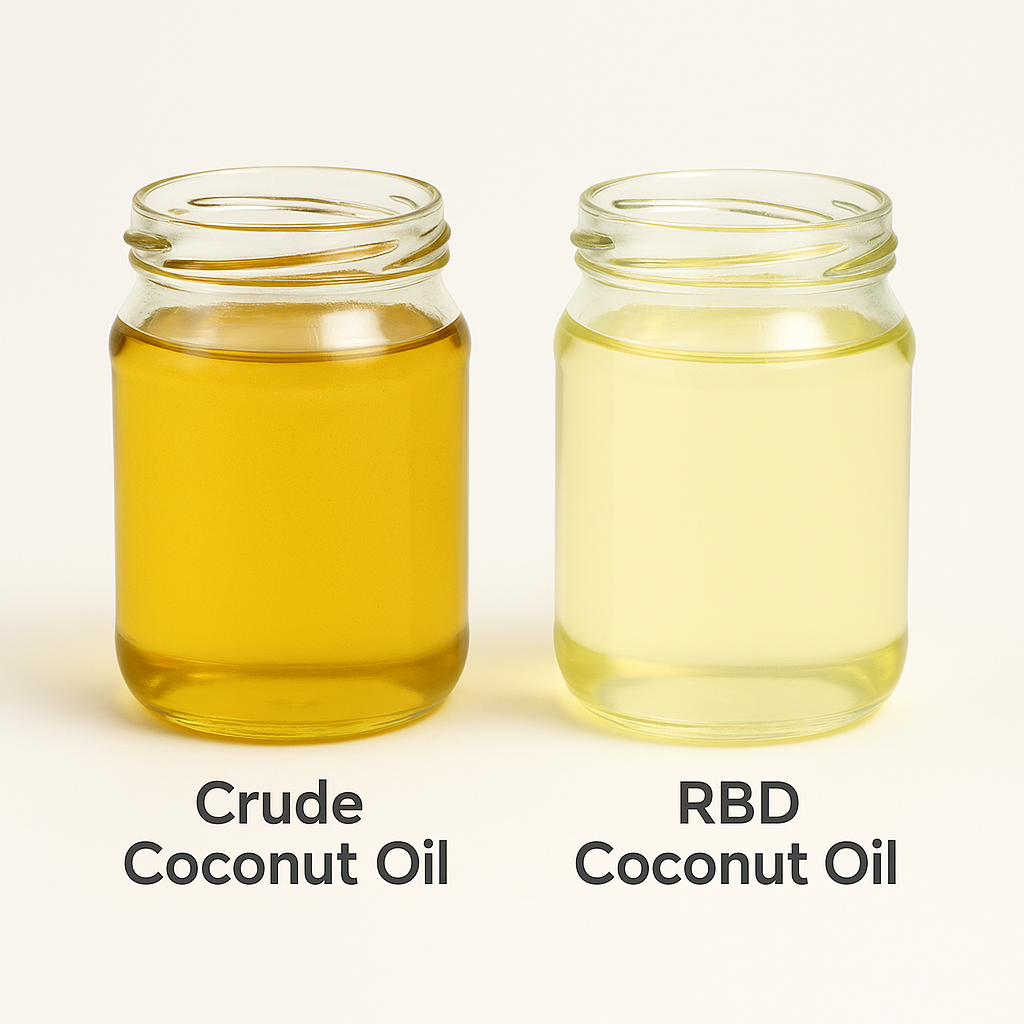
RBD coconut oil must have a water-clear appearance when fully liquid. Color is one of the strongest indicators of product purity.
✔ Acceptable Color Range
-
Lovibond color: max 1.0Y, 0.1R
-
Completely transparent with no yellow tint
-
No sediment, haze, or turbidity when warm at 30–35°C
✔ Why Color Matters
-
Indicates successful bleaching
-
Reflects stability and low impurities
-
Required for cosmetic & personal care formulations
.jpg)
👃Odor Requirements in RBD Coconut Oil
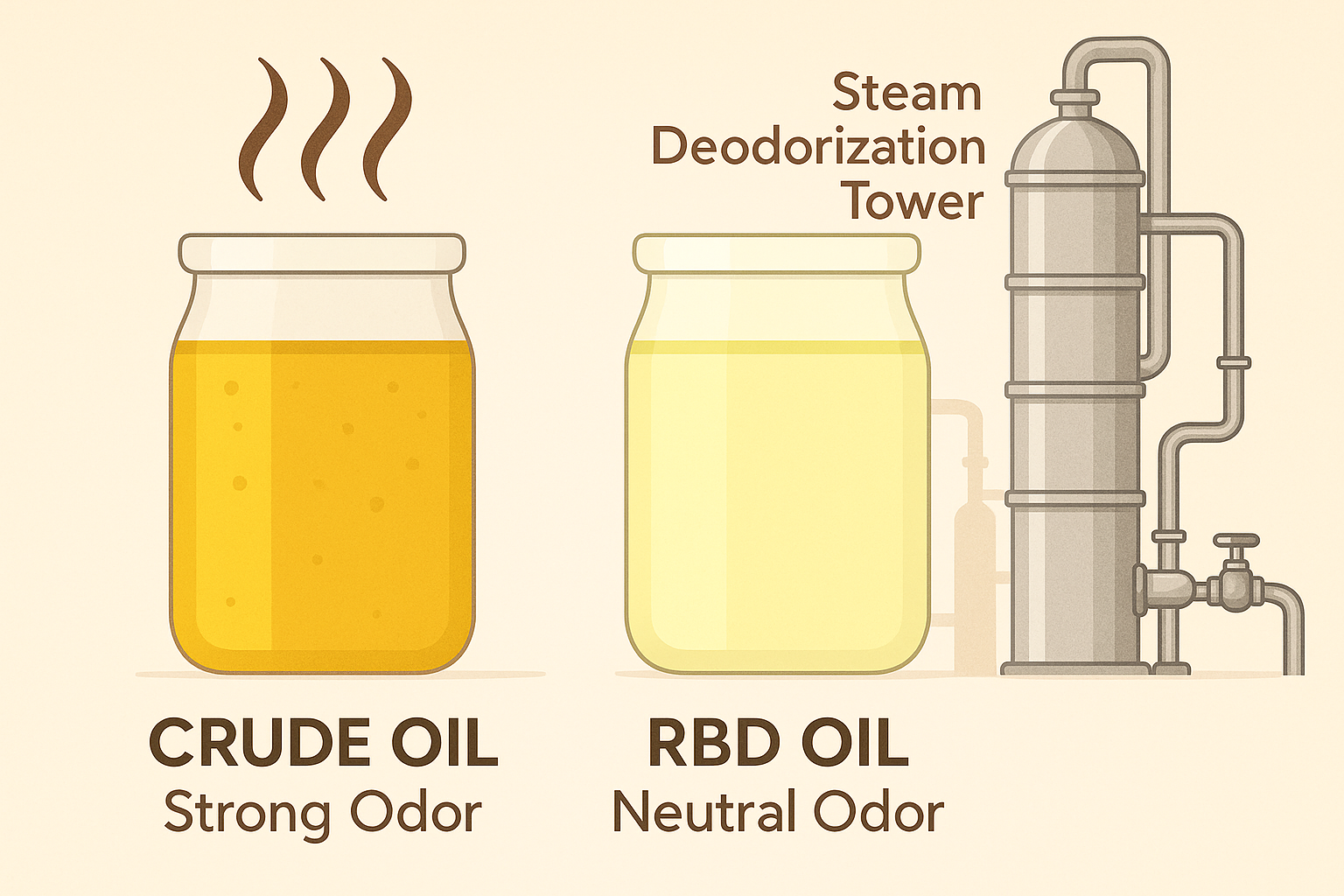
During deodorization, natural volatile compounds are removed, giving RBD coconut oil its signature neutral odor profile.
✔ Acceptable Odor Standard
-
Completely neutral smell
-
No coconut aroma
-
No smoky, rancid, or chemical notes
✔ Why Odor Matters
-
Essential for food manufacturers who require a neutral base oil
-
Required for cosmetic products where fragrance is added
-
Prevents sensory interference in final formulations
💧Clarity Requirements in RBD Coconut Oil
Clarity reflects the oil’s refinement level and purity.
✔ Acceptable Clarity Profile
-
Crystal clear when fully melted
-
No haze, cloudiness, suspended particles, or residue
-
Turns white and solidifies uniformly at room temperature (natural property)
✔ Why Clarity Matters
-
Indicates effective filtration & removal of impurities
-
Ensures stability during storage & transport
-
Required for transparent cosmetic formulations (serums, balms, oils)
🏭How Manufacturers Ensure These Quality Standards
1. Activated Carbon Bleaching
Removes pigments → improves color and clarity.
2. High-Vacuum Deodorization
Removes volatile compounds → eliminates odor.
3. Multi-stage Filtration
Removes micro-particles → ensures crystal clarity.
4. Color & Odor Testing (QC Lab)
Lovibond colorimeter, sensory panel, stability tests.
5. Moisture & FFA Control
Ensures long shelf life and prevents discoloration or off-odors.

📊 Standard QC Specifications for RBD Coconut Oil
| Parameter | Standard Requirement |
|---|---|
| Color | Max 1.0Y, 0.1R |
| Odor | Neutral, no off-odor |
| Clarity | Clear when melted |
| Moisture | ≤ 0.1% |
| FFA | ≤ 0.1% |
| Peroxide Value | ≤ 1.0 meq/kg |
❓FAQ – Color, Odor, Clarity in RBD Coconut Oil
1. Why does some RBD coconut oil look slightly yellow?
Minor oxidation or insufficient bleaching.
2. What causes haze in RBD oil?
Improper filtration or moisture contamination.
3. Should RBD oil have a coconut smell?
No — deodorization removes all natural aroma.
4. Why does RBD oil become white when solid?
It is natural for coconut oil to become opaque when cooled.
📞 About Rich Moon
Rich Moon produces RBD Coconut Oil with strict QC control over color, odor, and clarity, meeting export standards for global buyers in food, cosmetics, pharmaceuticals, and oleochemicals across Asia, Africa, and Europe.
Contact us for quotation:
Nora – Sales Executive
📧 sale5@richmoon.com.vn
📱 +84 964 279 454
🌐 www.richmoon.com.vn
Views: 680





-490.png "Applications of Rice Bran Oil in Industrial Manufacturing – Complete 2025 Guide")