How to Store Coconut Oil Correctly to Avoid Oxidation
🌴 How to Store Coconut Oil Correctly to Avoid Oxidation & Off-Odor (2025 Buyer Guide)
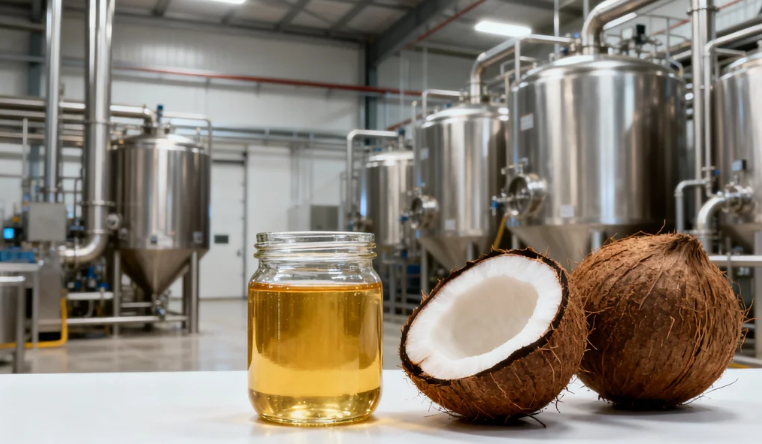
Coconut oil is known for its excellent stability, but improper storage can still cause oxidation, rancidity, color changes, and unpleasant odors, especially in warm or humid environments. For global buyers, manufacturers, and distributors, maintaining proper storage conditions is essential to preserve oil quality and ensure compliance with export standards.
This complete 2025 guide explains how to store Virgin Coconut Oil (VCO) and Refined Bleached Deodorized Coconut Oil (RBD) correctly, including temperature rules, packaging options, handling guidelines, and warning signs of spoilage.
🧪 1. Why Coconut Oil Oxidizes
Even though coconut oil is rich in stable saturated fats, it is still sensitive to environmental factors:

Causes of oxidation:
-
🔥 High heat (above 28–32°C) accelerates Peroxide Value (PV) increase.
-
🌞 Direct sunlight / UV light breaks down fatty acids and affects color.
-
💧 Moisture contamination increases Free Fatty Acid (FFA) levels.
-
🍃 Air (oxygen exposure) triggers rancidity over time.
-
📦 Poor packaging (thin plastic, rusted drums, loose seals) allows oxidation and microbial intrusion.
Understanding these triggers helps prevent premature degradation.
🧊 2. Ideal Storage Conditions for Coconut Oil
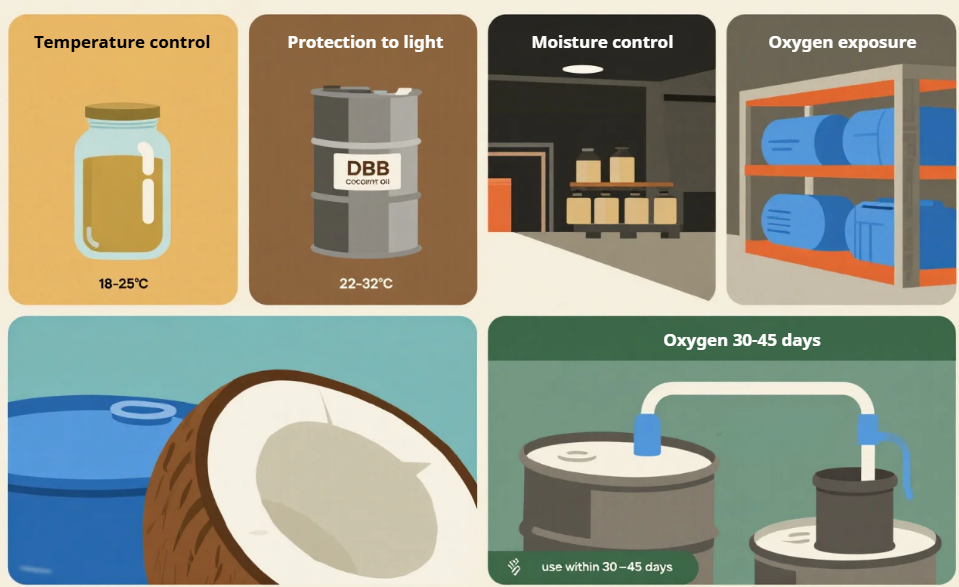
🌡️ A. Temperature
-
Virgin Coconut Oil (VCO):
Store at 18–25°C, away from direct heat. VCO naturally solidifies below ~20°C — this is normal and reversible. -
RBD Coconut Oil:
Store at 25–32°C to avoid full solidification in drums, which can make handling more difficult.
💡 B. Protection From Light
Light is one of the strongest catalysts of oxidation.
-
Store oil in dark rooms.
-
Use UV-protected or opaque containers when possible.
💧 C. Moisture Control
Moisture causes hydrolysis, increasing FFA and creating a soapy or sour smell.
Best practices:
-
Keep drums tightly sealed at all times.
-
Avoid storing in damp or condensation-prone areas.
-
Do not use open-air pumps without moisture protection.
🍃 D. Oxygen Exposure
Limit the oil's contact with air:
-
Minimize headspace in drums.
-
Once opened, use the oil within 30–45 days for best quality.
-
Apply nitrogen flushing for long-term storage.
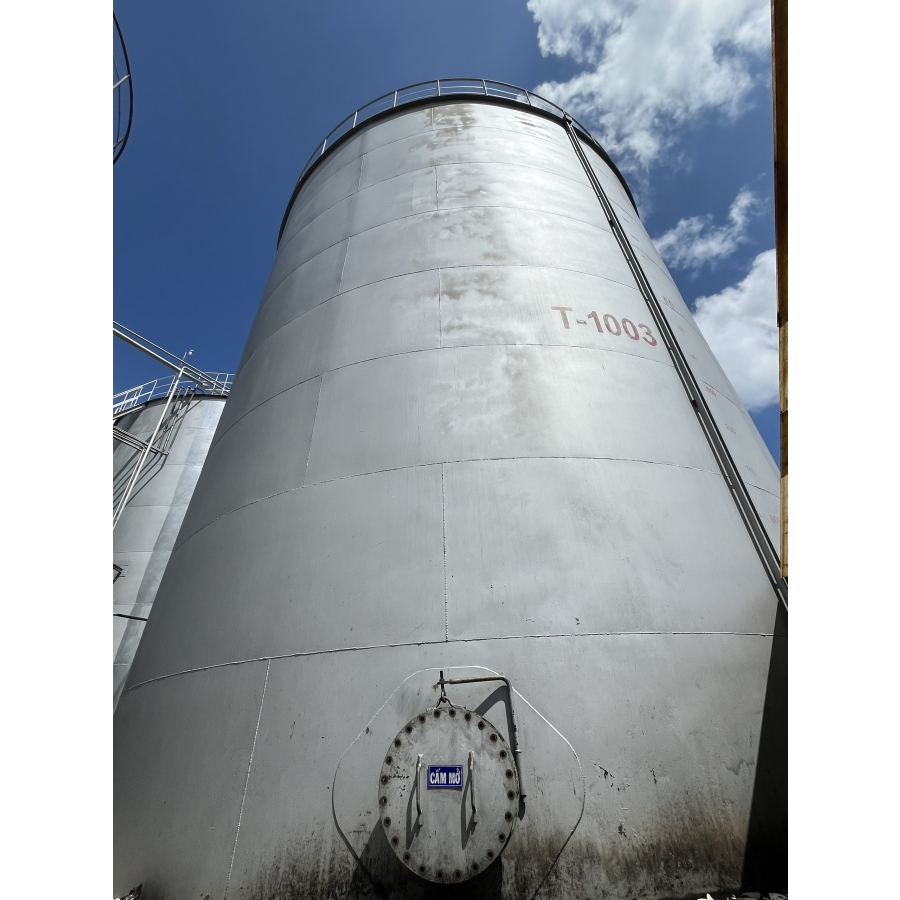
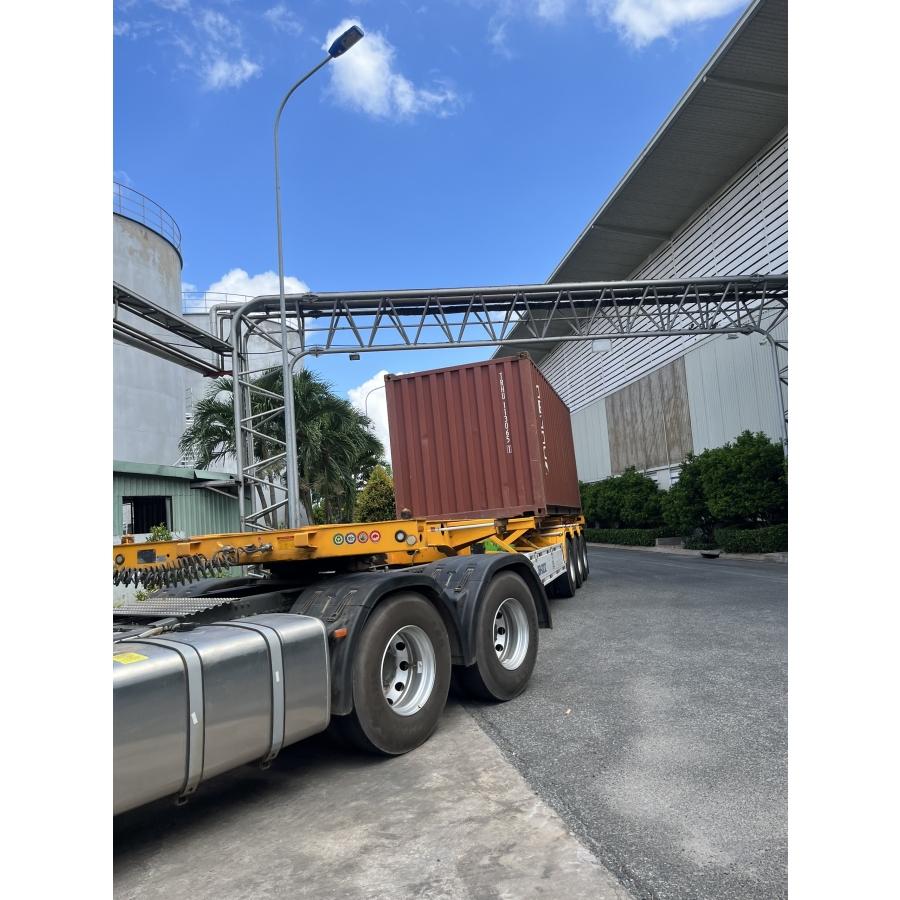
🏭 3. Best Packaging Options for Coconut Oil
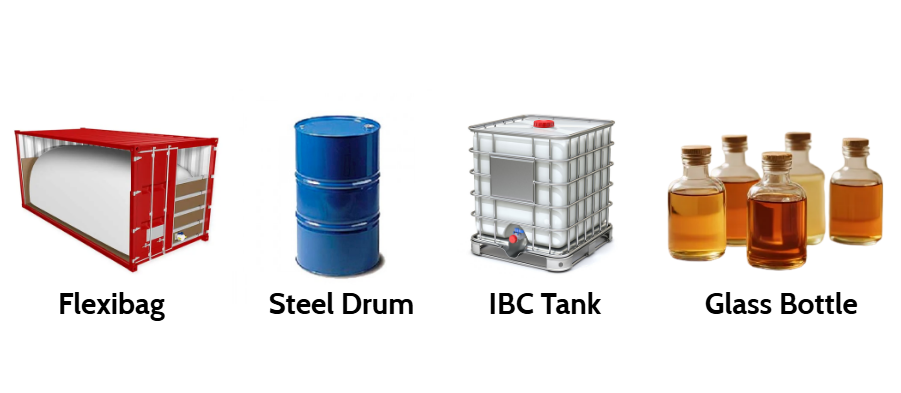
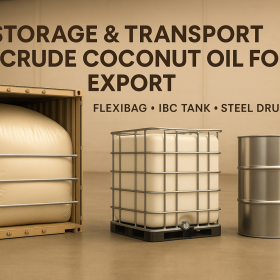
🥇 1. Steel Drums (180–190 kg)
-
Best for export.
-
Strong, airtight, food-grade with epoxy coating.
-
Excellent shelf-life preservation.
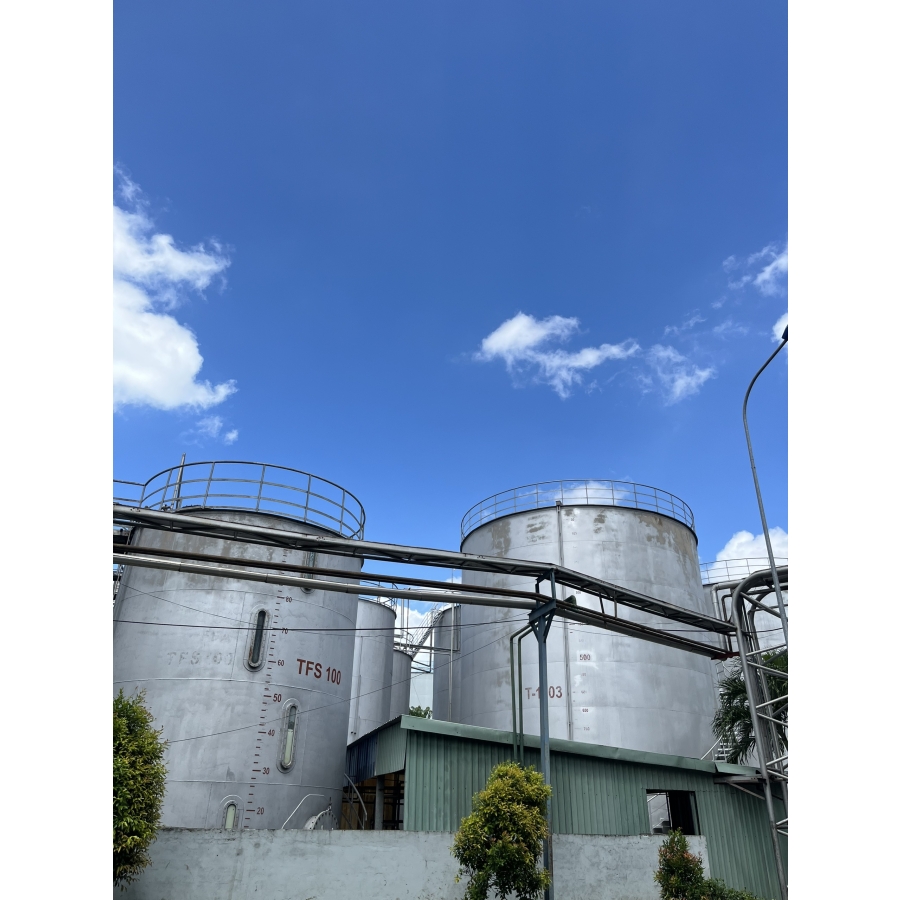
🧰 2. IBC Tanks (900–1000 kg)
-
Ideal for industrial buyers consuming large volumes.
-
Protect from sunlight if stored outdoors.
📦 3. Flexibags (20–22 MT)
-
Lowest cost per MT for bulk shipping.
-
Should be stored at stable temperature.
-
Not suitable for repeated opening.
🍾 4. Glass Bottles (Retail)
-
Best presentation for VCO.
-
Amber glass offers UV protection.
🕒 4. Shelf Life of Coconut Oil (Updated 2025)
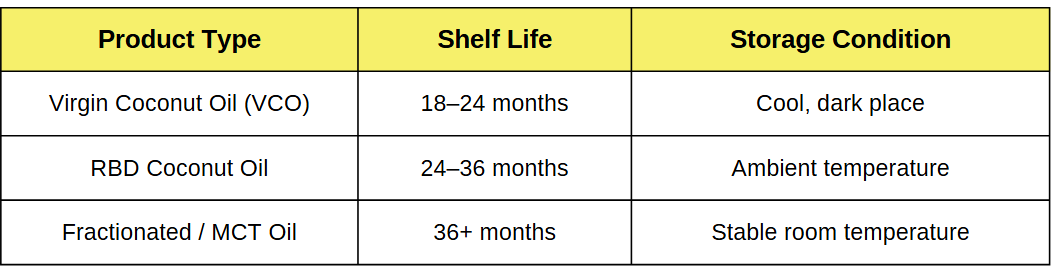
Shelf life depends largely on FFA, PV, moisture, and packaging quality.
🔧 5. Practical Storage Tips for Importers & Manufacturers
-
✅ Use FIFO (First In – First Out) rotation
-
✅ Monitor warehouse temperature daily
-
✅ Keep drums upright and fully sealed
-
✅ Avoid direct sunlight at all costs
-
✅ Use nitrogen flushing for long-term storage
-
✅ Prevent contact with wooden floors or damp areas
-
✅ Re-test oil (FFA, PV, moisture) after long storage periods
🚨 6. Signs of Poor Storage (Warning Indicators)
If you observe any of these signs, oil quality may be compromised:
-
Darkening or yellow discoloration
-
Sharp, sour, or rancid smell
-
Thickened or unusual texture
-
Elevated FFA or PV test results
-
Unexpected sediment or haze
Immediate quality testing is recommended when these symptoms appear.
🏁 Conclusion
Correct storage plays a crucial role in preserving the freshness, aroma, stability, and commercial value of coconut oil. By controlling temperature, moisture, light, and oxygen exposure, businesses can avoid oxidation and maintain export-grade quality for extended periods.
Whether you supply food manufacturers, cosmetic brands, or industrial buyers, proper storage is essential for product consistency and customer trust.
❓ Frequently Asked Questions
❓ Does coconut oil expire?
❓ Why does coconut oil develop off-odor?
❓ Should coconut oil be refrigerated?
❓ What is the best packaging for long-term storage
🏢 About RICH MOON CO., LTD
RICH MOON CO., LTD is a trusted supplier of Virgin Coconut Oil (VCO), RBD Coconut Oil, MCT Oil, CFAD, and coconut-based ingredients from Vietnam.
We export to the USA, EU, Japan, Korea, India, Middle East, and more.
Documentation available: CO, MSDS, COA, HACCP, ISO, Organic (upon request).
We offer the following packaging:
✔ Steel Drums
✔ IBC Tanks
✔ Flexibags
✔ Private Label / OEM
📞 Contact Ms. Jade – Sales Executive
📱 Phone / WhatsApp / Zalo / WeChat: +84 833 997 879
✉️ Email: sale1@richmoon.com.vn
🌐 Website: www.richmoon.com.vn
🏢 Address: 270/4i Le Dinh Can Street, Tan Tao Ward, Binh Tan District, Ho Chi Minh City, Vietnam.
Views: 934




-490.png "Applications of Rice Bran Oil in Industrial Manufacturing – Complete 2025 Guide")